

Ingredientes
-
Mejillas de ternera
-
Brasa
Instrucciones
-
01
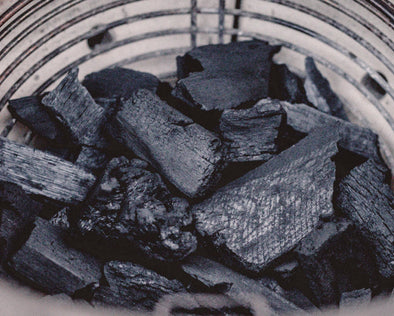
Llena la cámara de combustión con carbón vegetal en trozos y añade 2 o 3 trozos de la madera que hayas elegido: roble para un sabor intenso y terroso, nogal americano para el clásico aroma ahumado de la barbacoa, o cerezo para un perfil ligeramente más dulce y suave. Coloca las placas deflectoras para la cocción indirecta y deja que la parrilla alcance una temperatura estable de entre 225 y 250 °F antes de añadir la carne. Mantener una temperatura constante desde el principio es lo que marca la diferencia entre una buena cocción a fuego lento y una excelente.
-
02
Quita la membrana plateada y cualquier grasa dura y cerosa de la superficie de las carrilladas de ternera. Deja un poco de la grasa más blanda en su sitio: se derretirá durante la cocción y mantendrá la carne jugosa durante todo el largo proceso de ahumado. Seca bien toda la superficie con papel de cocina. Una superficie seca es lo que permite que se forme bien la corteza, y en un corte como las carrilladas de ternera, la corteza es donde reside gran parte del sabor.
-
03
Mezcla la sal, la pimienta, el ajo en polvo, la cebolla en polvo y el pimentón ahumado, y espárcelos generosamente y de manera uniforme por toda la superficie de cada carrillada de ternera. Deja reposar las carrilladas sazonadas a temperatura ambiente entre 30 y 60 minutos antes de ponerlas en la parrilla. Este tiempo de reposo permite que el sazonado se adhiera y empiece a reabsorber la humedad de la superficie.
-
04
Coloca las carrilladas de ternera directamente sobre las rejillas, sobre el calor indirecto. Cierra la tapa y mantén una temperatura constante de entre 225 y 250 °F. Ahúmalas durante 2 o 3 horas, manteniendo la tapa cerrada todo lo posible. El objetivo de esta fase es conseguir una costra gruesa y bien formada en el exterior de la carne antes de pasar a la fase de estofado. Las carrilladas estarán listas para envolverlas cuando la costra tenga un aspecto oscuro, firme y bien desarrollada.
-
05
Pon las carrilladas de ternera en una bandeja de papel de aluminio. Añade suficiente caldo de ternera hasta que cubra más o menos una cuarta parte de la altura de la carne, y añade unas cuantas porciones de mantequilla o una cucharada de sebo de ternera. Tapa bien la bandeja con papel de aluminio. El líquido de cocción se convertirá en vapor dentro de la bandeja y hará que las carrilladas alcancen el punto óptimo de ternura.
-
06
Vuelve a poner la sartén tapada en la parrilla y mantén una temperatura de entre 225 y 275 °F. Sigue cocinando hasta que la temperatura interna de las carrilladas alcance entre 200 y 210 °F y una sonda o un palillo se introduzca en la parte más gruesa sin ninguna resistencia. La prueba de la sonda es el indicador más fiable para saber si están en su punto: la temperatura te da el rango, pero es el tacto lo que te dice cuándo están realmente listas.
-
07
Saca la sartén de la parrilla y deja las carrilladas tapadas y reposando en la sartén entre 30 y 60 minutos antes de cortarlas en rodajas o desmenuzarlas. El reposo permite que los jugos internos se redistribuyan por toda la carne. Si las cortas demasiado pronto, esos jugos se van directamente a la tabla de cortar en lugar de quedarse donde deben estar.
-
08
Saca las carrilladas de ternera del caldo de cocción y córtalas en rodajas, como si fuera falda de ternera, para emplatarlas, o desmenúzalas para hacer tacos, bocadillos o cuencos de arroz. Antes de servir, vierte un poco del caldo de cocción sobre la carne para que se mantenga jugosa y le dé un toque final de sabor.


